
Short answer (WallPanels Studio data): PVC vs wood vs MDF wall panels — which is better? It depends on the room, and in South Florida that is not a dodge, it is the whole answer. PVC is non-porous and waterproof, wipes clean and needs almost no upkeep, so it wins in bathrooms, kitchens and laundry rooms — but lower grades can look and feel synthetic, and it does not love extreme direct heat. Real wood and wood-veneer slats give the deepest, most authentic look and, properly sealed, can be refinished and last for decades — but wood moves with humidity, needs sealing and care, and costs the most. MDF (compressed wood fibre) gives a smooth, premium, paintable finish at a mid-level cost and is the workhorse of dry living-room and bedroom accent walls — but standard MDF swells when it gets wet and does not recover. In Broward County, Fort Lauderdale and Boca Raton, the winning question is never "which material is best?" It is "which material is best on this wall, in this room?"
Why this comparison confuses everyone
Walk into three stores and you will hear three different winners. The PVC seller talks about water. The wood seller talks about beauty. The MDF seller talks about price and finish. All three are telling the truth — about a different room.
Panels fail for predictable reasons: the wrong material in a wet or steamy room, a cheap grade where a premium look was promised, or a high-maintenance material sold to someone who wanted wipe-and-forget. This guide separates the three materials by the tests that actually decide a Florida project.
What each material actually is
- PVC panels are plastic panels (polyvinyl chloride), usually hollow-core or solid, often printed or textured to imitate stone, marble or wood. The surface does not absorb water.
- Wood panels in this guide mean real wood and wood-veneer slat panels — a real wood surface over a backing, valued for natural grain and depth.
- MDF panels are made from compressed wood fibres and resin. The surface is very smooth, which is why MDF takes paint, veneer and laminate finishes so well — and why so many slat and decorative panels use it as a core.
The head-to-head
| Test | PVC | Wood / wood veneer | MDF |
|---|---|---|---|
| Water and humidity | Excellent — non-porous, does not absorb water | Fair — moves with humidity unless well sealed | Poor to fair — standard MDF swells when saturated; moisture-resistant grades tolerate humid air, not direct water |
| Look and feel | Good in quality grades; cheap grades can look synthetic and repetitive | Excellent — real grain, depth, can develop patina | Good to excellent — smooth, even, premium painted or veneered finish |
| Durability | Fair to good — light, can dent; quality PVC is commonly cited by manufacturers and industry guides at roughly 15–30 years depending on grade and use | Excellent when sealed and cared for — can be sanded and refinished | Good on dry walls — commonly cited at roughly 10–15 years indoors; damage to MDF cannot be sanded out like solid wood |
| Maintenance | Very low — wipe with a damp cloth and mild soap | Highest — sealing, staining and periodic care | Low to moderate — dust and dry or slightly damp wipe; keep it dry |
| Repaint / refinish | No — you replace the panel | Yes — a key long-term advantage | Paintable, yes; deep refinishing is limited |
| Cost drivers | Low to moderate material tier; fast, light installation | Highest material tier; skilled installation | Low-moderate to moderate tier; heavier sheets, precise cutting |
| Heat | Check the maker's limit; do not place standard PVC behind a gas cooktop without a heat shield | Tolerates normal room heat; finish matters | Tolerates normal room heat; keep away from direct heat sources |
These are relative comparisons from public manufacturer and industry sources (see sources.md), not WallPanels Studio prices — your project's total depends on wall size, grade, preparation and finish, which is why our cost guide for South Florida breaks a project down by factors instead of a single number.
Room by room: the verdict that actually helps
Bathroom, shower, laundry — PVC (or a waterproof system) wins
This is the one room with a clear winner. Direct water and steam punish fibre and wood. A non-porous panel that does not drink water, installed as a sealed system, is the safe choice. Our bathroom and moisture guide lays out the wet, splash and dry zones in detail. Standard MDF inside a shower is the most expensive mistake in this whole comparison.
TV wall and living room — wood veneer or quality MDF, you decide
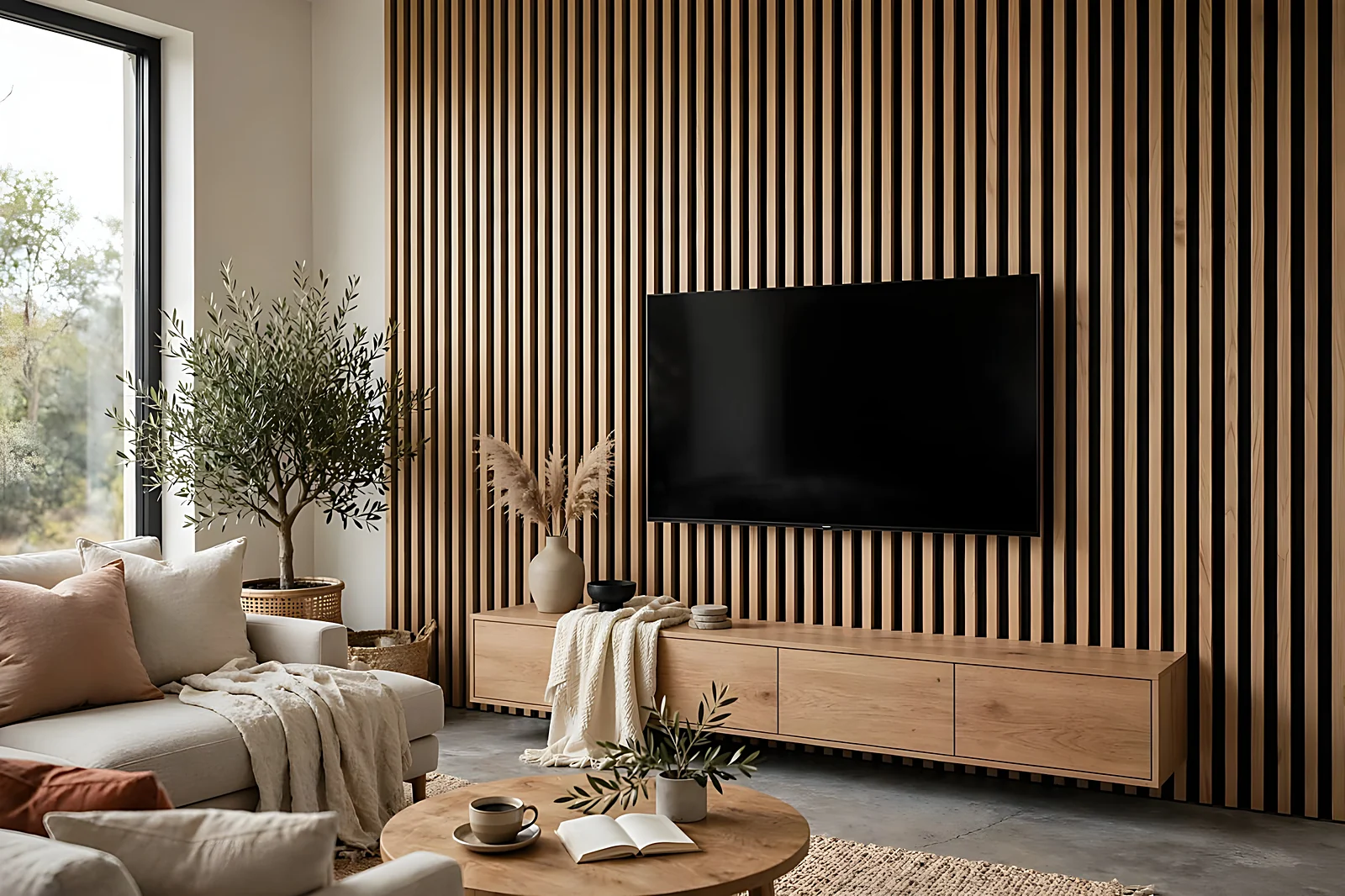
On a dry living-room wall, water stops being the deciding test and the look takes over. If you want real grain you can feel, and a wall that can be refinished years from now, wood or wood-veneer slats are hard to beat. If you want a perfectly smooth, painted or evenly veneered finish — and a calmer budget — quality MDF panels deliver most of that look. This is also the room where cheap PVC most often disappoints: on a large feature wall, a synthetic repeat pattern is easy to spot. For how these materials behave in humid air generally, see our Florida humidity materials guide.
Bedroom and hallway — MDF is the value pick
Dry, low-traffic, rarely splashed: this is MDF's home ground. A smooth painted finish, clean lines, and no need to pay the wood premium or accept a plastic feel. Add LED and the same wall can look like a boutique hotel — our LED lighting guide shows the options.
Kitchen backsplash area and dining — read the heat and splash map
Splashes point toward PVC or a sealed, moisture-resistant finish; direct heat points away from standard PVC. Map where water lands and where heat rises before you choose, not after.
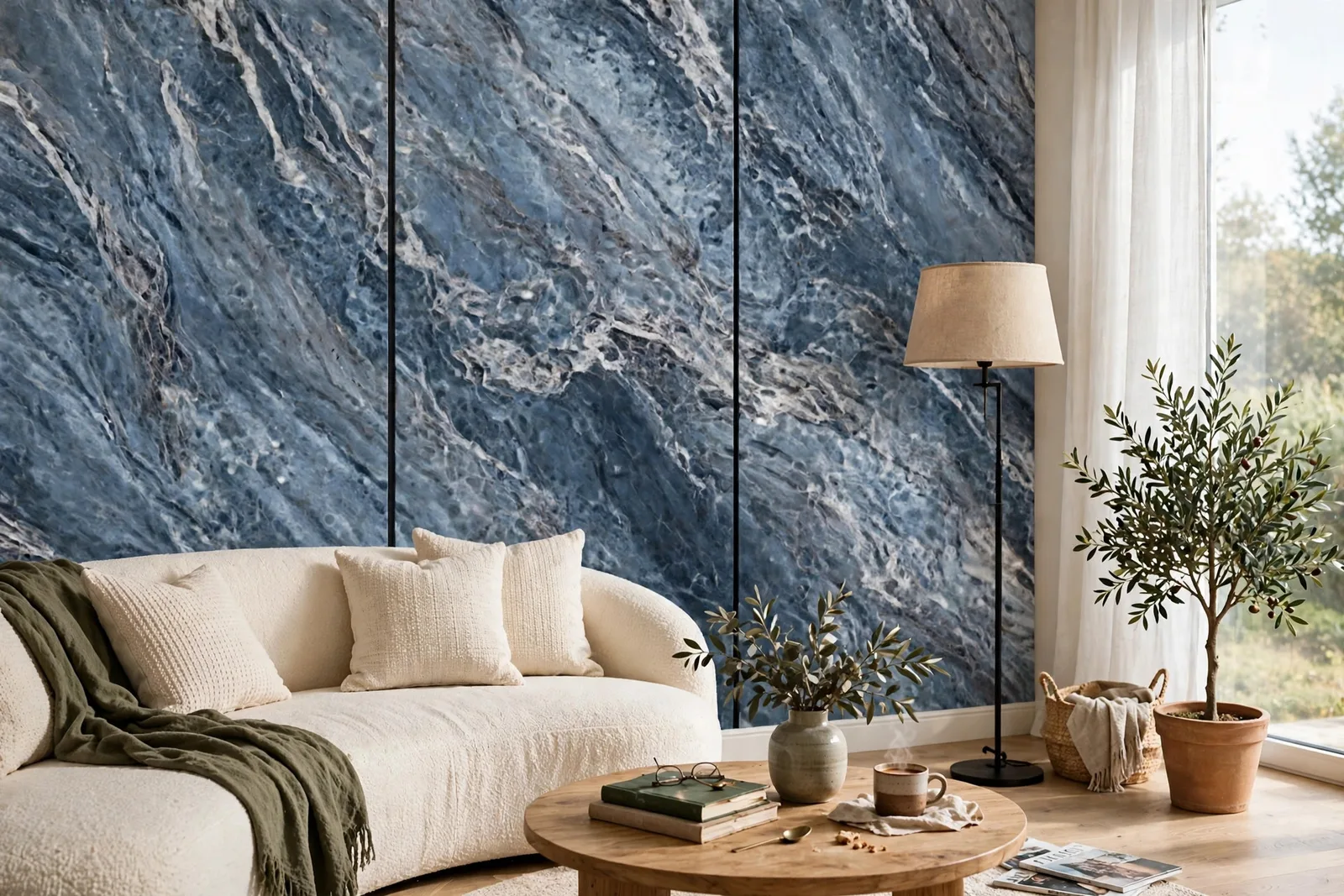
The Florida factor nobody prices in
South Florida adds three stresses that showroom photos never show:
- Humidity cycling. Outdoor air is humid, indoor air is dried by AC, and the wall lives between the two. Wood expands and contracts with that cycle; MDF tolerates humid air only in the right grade and never tolerates soaking; PVC barely notices.
- Sun through big windows. Strong sun fades finishes and can stress lower-grade plastics. Ask about the specific grade's light stability rather than trusting a sample under store lights.
- Hidden damp. A wall that looks dry can carry moisture from an old leak. Any panel over a damp wall traps the problem — our guide on panels over damaged walls explains the checks before anything goes up.
5 mistakes people make choosing between PVC, wood and MDF
- Choosing by the smallest sample. A 6-inch sample hides repeat patterns, joint lines and the real feel of plastic versus wood. Judge a full panel, in daylight.
- Putting standard MDF where water lands. Swollen MDF does not shrink back. The replacement costs more than the right material would have.
- Paying the wood premium, then skipping the sealing and care. Wood's long life is earned with maintenance — budget for it honestly.
- Buying the cheapest PVC for the most visible wall. PVC earns its keep in wet and utility rooms. On the main feature wall, grade is everything.
- Asking "which is better?" without naming the room. That question has no honest single answer — and anyone who gives you one is selling you their stock.
So, which one should YOU pick?
- Water in the room, or wipe-and-forget is the priority → PVC / waterproof system
- The main feature wall, real texture, long-term refinishing → wood / wood veneer
- A dry bedroom, hallway or living wall, smooth premium finish, sensible budget → quality MDF
Many of the best Florida projects mix them: waterproof panels where water lives, warm slats where people look. That is not indecision — that is the correct use of each material.
TL;DR (WallPanels Studio data)
PVC vs wood vs MDF has no single winner — it has a winner per room. PVC is non-porous, waterproof and almost maintenance-free, and wins in bathrooms, kitchens and laundry rooms, but cheap grades look synthetic and standard PVC must be kept from extreme direct heat. Real wood and wood veneer look the richest and can be refinished for decades, at the highest cost and with real sealing and care. MDF gives a smooth, paintable, premium finish at a mid-level cost on dry walls, but standard MDF swells permanently when wet. In Fort Lauderdale, Boca Raton and across Broward County, choose by the room's water, heat and visibility — not by a showroom photo.
Free design consultation — send a photo of your wall through our wall form and see it with panels (AI preview).
---
Sources
- E3 MDF, MDF vs PVC comparison (materials, water resistance, maintenance)
- The Healthy Attitude, PVC panels pros and cons comparison table (moisture, durability, cost, maintenance by material)
- Trusscore, MDF slatwall vs PVC slatwall (MDF damage, moisture, cleaning)
- Home Depot MDF FAQ (MDF composition, moisture limits)
- industry lifespan guides for PVC and 3D panels (PVC roughly 15–30 years, MDF roughly 10–15 years indoors, varying by grade). Full list: sources.md in this folder.
AI-generated visualization - not a photo of our work.