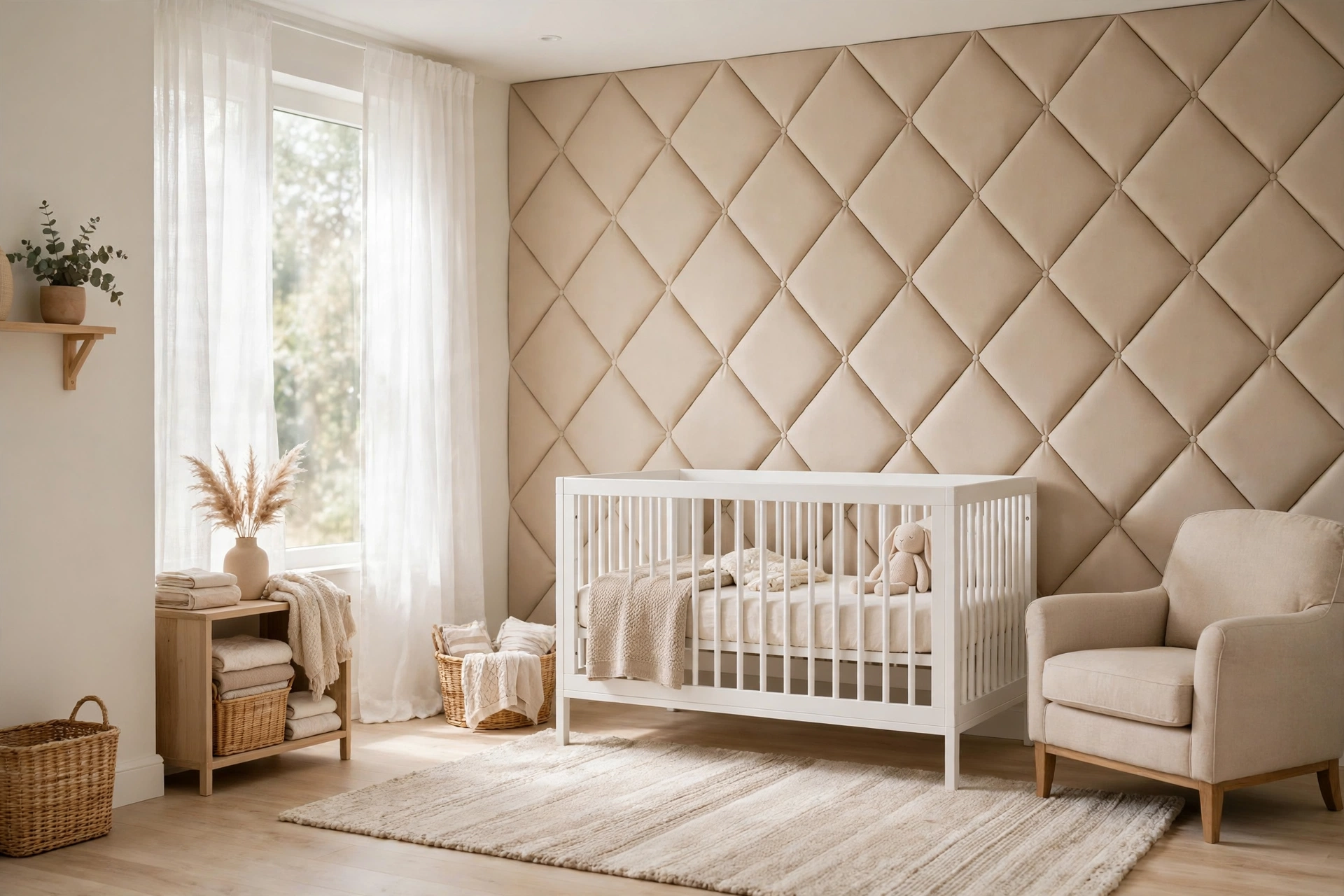
Short answer (WallPanels Studio data): Do wall panels smell or off-gas? Some do, briefly — and the panel itself is often not the main source. In our installation experience, most noticeable odor in the first days comes from three things that are not the decorative face of the panel: the construction adhesive used behind it, any foam or felt backing, and the plastic packaging the panels arrived in. That smell is typically strongest on day one and fades as the room is ventilated. Off-gassing — the slow release of volatile organic compounds (VOCs) — depends on the material. Solid PVC, stone-look and metal panels have little to release on their own. Wood-based composites such as MDF are different: the resins that bind the fibers can release formaldehyde, and the amount depends entirely on the specific product's emission class and certification. So the honest answer for a nursery or bedroom in Fort Lauderdale, Boca Raton or anywhere in Broward County is not "panels are safe" or "panels are unsafe" — it is: choose a specific low-VOC panel and a low-VOC adhesive, verify the labels on those exact products, install early, and ventilate the room for 48–72 hours before anyone — especially a baby — sleeps in it. Below is how to do each of those checks without guessing.
Why new panels smell at all
"That smell" is your nose detecting volatile organic compounds — chemicals that evaporate easily at room temperature. Almost every new manufactured product releases some at first: new furniture, new carpet, a fresh coat of paint, a new car interior. Panels are not special in this respect, and a smell on day one does not by itself prove a product is dangerous — just as no smell at all does not prove a product emits nothing. Smell is a signal to ventilate and to check what you bought, not a verdict on its own.
In a typical panel installation, the odor sources rank roughly like this:
- The adhesive. A zigzag of construction adhesive behind every panel is standard practice. Adhesives are chemical products, and they are usually the strongest odor source in the first 24–48 hours while they cure. This is also the easiest source to control: low-VOC and solvent-free adhesive options exist, and the adhesive's own label and safety data sheet state its VOC content.
- The backing. Acoustic slat panels carry a felt backing, often made from recycled plastic fiber; other panels carry foam or composite backings. These materials can hold a factory or packaging smell at first and release it over the first days.
- The packaging. Panels travel wrapped in plastic film and cardboard, sometimes for weeks in a warm container or warehouse. In South Florida heat, packaging odor can cling to the product and be mistaken for the product itself. Unwrapping panels a day or two before installation, in a ventilated garage or covered outdoor area, removes much of this before the panels ever enter the bedroom.
- The panel material itself. This is the source people worry about most — and for some materials it is the smallest one. Which brings us to the real question.
It depends on the material — here is the honest breakdown
| Panel family | What it is made of | Off-gassing picture |
|---|---|---|
| PVC stone-look / glossy sheets | PVC polymer sheet, about 3 mm thick | The sheet itself is comparatively inert and does not contain formaldehyde-based resin. Surface finishes and, above all, the adhesive behind it are the parts to check. |
| Stone-look (PU / composite stone) and metal panels | Mineral / polyurethane composite or metal face | Low inherent emissions from the panel itself; again, adhesive and any backing are the variables. |
| Real wood slats | Solid wood or veneer over a core | Wood itself emits tiny natural amounts of organic compounds (that is literally the smell of wood). The core under the veneer and the finish coating matter more than the wood. |
| MDF and wood-composite panels | Wood fibers bound with resin | The category to check most carefully. The resins can release formaldehyde, and the amount varies widely by product — from standard boards to certified low-emission and no-added-formaldehyde products. The product's emission documentation is the whole answer here. |
| Acoustic felt backing | Usually PET fiber felt | Generally low-emitting, but check the specific product's documentation like any other component. |
The pattern is simple: the more a panel is a glued-together composite, the more its paperwork matters; the simpler and more inert the material, the more the adhesive becomes the main thing to choose carefully. The same material logic — PVC behaving differently from wood-based boards in Florida conditions — runs through our guide to which panel material survives Florida humidity and the head-to-head in PVC vs wood vs MDF panels.
Formaldehyde and VOCs: the labels that actually mean something
You cannot judge emissions by looking at a panel, and marketing words like "eco" or "natural" are not measurements. These are the designations that carry real, checkable meaning for the US market:
- Low-VOC / zero-VOC claims on the product and the adhesive. For paints and adhesives, VOC content is stated in grams per liter on the label or technical data sheet. Lower is better for a bedroom; for a nursery, choose the lowest-VOC adhesive option that is still rated for the panel type.
- GREENGUARD and GREENGUARD Gold certification (UL). An independent certification that tests a finished product's chemical emissions. The Gold level applies stricter limits and was designed with sensitive environments — schools and healthcare — in mind, which is why it is the more relevant of the two for a nursery.
- CARB Phase 2 / EPA TSCA Title VI compliance for composite wood. California's Air Resources Board standard, mirrored by the federal EPA rule, limits formaldehyde emissions from MDF, particleboard and hardwood plywood sold in the US. A composite-wood panel sold legally in the US should carry this compliance — and for a child's room, products documented as ultra-low-emitting (ULEF) or no-added-formaldehyde (NAF) go further still.
- The safety data sheet (SDS) and the emissions report for the exact SKU. Not the brand in general — the exact product, in the exact finish. A reputable supplier can provide these. If no documentation exists for a product you are considering for a nursery, that absence is itself information: choose a documented product instead.
One honest limit, stated plainly: WallPanels Studio installs panels; we are not a testing laboratory, and we do not publish emission figures for specific products because those figures belong to each manufacturer's own certified testing. What we can do — and what this guide recommends — is select products that carry the independent certifications above and show you their documentation before installation. Anyone who quotes you a precise VOC number for a panel without showing a test report for that exact product is guessing.
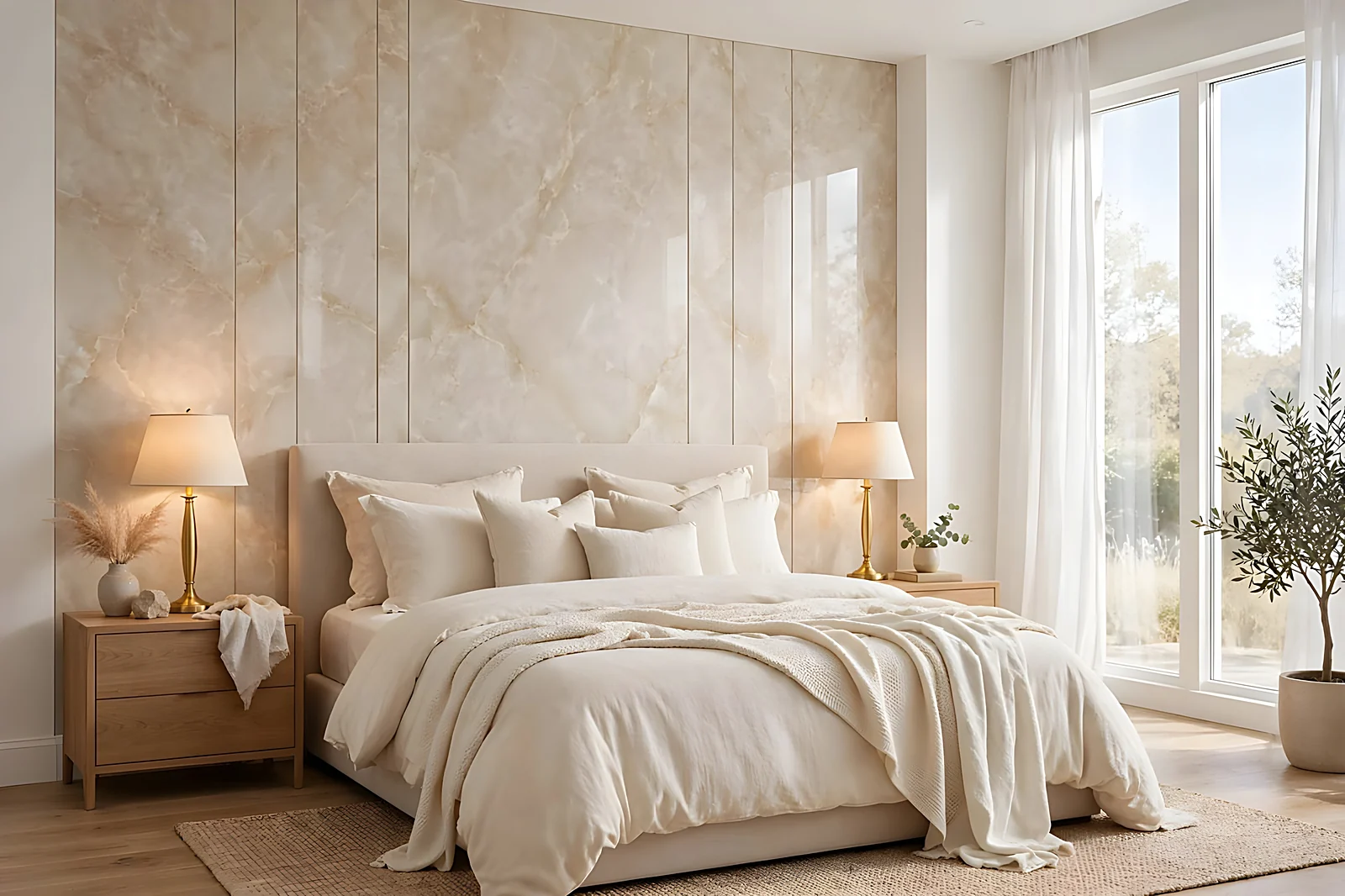
The nursery and bedroom plan: five cautious rules
For a baby's room, a child's bedroom, or a bedroom for anyone sensitive to air quality, this is the sequence we recommend in Broward County, Fort Lauderdale and Boca Raton homes:
- Choose the material for the room, not just the photo. For a nursery, favor comparatively inert faces — PVC stone-look, metal or documented low-emission products — and treat standard uncertified MDF composites as the wrong default for this room.
- Specify a low-VOC adhesive — and say so before installation day. The adhesive is usually the biggest short-term odor source. Ask for the low-VOC option by name and keep its data sheet with the product paperwork.
- Unwrap early. Let panels air out of their packaging in a ventilated space for a day or two before they go on the wall. This alone removes much of the "new" smell people notice.
- Install early, ventilate after. Schedule installation at least several days before the room will be slept in — never on the day a baby moves in. After installation, ventilate the room well for 48–72 hours: windows open when weather allows, the AC fan running, and in Florida's humidity, the air conditioning itself helping to dry and exchange the air. If a primer or paint is part of the project, it follows the same rule as in our guide to painting wall panels — its own drying and ventilation time counts too.
- Trust the timeline, not just the nose. Odor usually fades noticeably within the first days of ventilation. If a strong chemical smell persists well beyond a week of good ventilation, that is not normal settling — stop, air the room, and review the product and adhesive documentation before the room is used as a nursery.
None of this is a reason to fear panels in a bedroom. It is the same common-sense sequence you would use for new furniture or a fresh repaint in a child's room — applied to panels, with the paperwork checked one step earlier.
A South Florida note: heat and humidity speed everything up
Warm air increases how fast materials release VOCs — scientists describe this as temperature dependence, and South Florida homes live on the warm side of it. Two practical consequences. First, the initial ventilation period matters more here, not less: a room aired properly for 48–72 hours with the AC running clears the installation-day peak far more effectively than a closed, hot room. Second, delivery and storage matter: panels stored for weeks in a hot garage in sealed plastic arrive smelling stronger than the same panels unwrapped and aired. Neither point changes which products are low-emitting — but both change how strong the first days smell, and how quickly it passes.
TL;DR (WallPanels Studio data)
Do wall panels smell or off-gas? A short-lived "new product" smell is common in the first days, and it usually comes mainly from the installation adhesive, the backing and the packaging — not the decorative face — and it fades with ventilation. Long-term emissions depend on the material: PVC stone-look, stone-composite and metal panels are comparatively inert on their own, while MDF and other resin-bound wood composites are the category whose formaldehyde emissions must be checked product by product. For a nursery or bedroom, choose a specific panel and adhesive documented as low-VOC — look for GREENGUARD (ideally Gold) certification, CARB Phase 2 / EPA TSCA Title VI compliance on composite wood, and an SDS or emissions report for the exact SKU — unwrap panels a day or two early, install several days before the room is used, and ventilate for 48–72 hours after installation. Do not install in a baby's room on move-in day.
Free design consultation — send a photo of your wall through our wall form and see it with panels (AI preview). Tell us if the room is a nursery or bedroom, and we will plan materials, adhesive and timing around that.
Sources: US EPA guidance on volatile organic compounds and indoor air, and on formaldehyde and composite wood products (EPA TSCA Title VI / CARB Phase 2 emission standards for MDF, particleboard and hardwood plywood); UL GREENGUARD and GREENGUARD Gold certification criteria for low chemical emissions from building products; general indoor-air guidance that chemical emissions from new building products are highest shortly after installation and decline with time and ventilation. Product-specific emission values are not stated in this article because they belong to each manufacturer's certified testing for the exact SKU — request the SDS and emissions report for the specific product before installing it in a nursery or bedroom.
Illustration: AI-generated concept image — for illustration, not a photo of our real work.